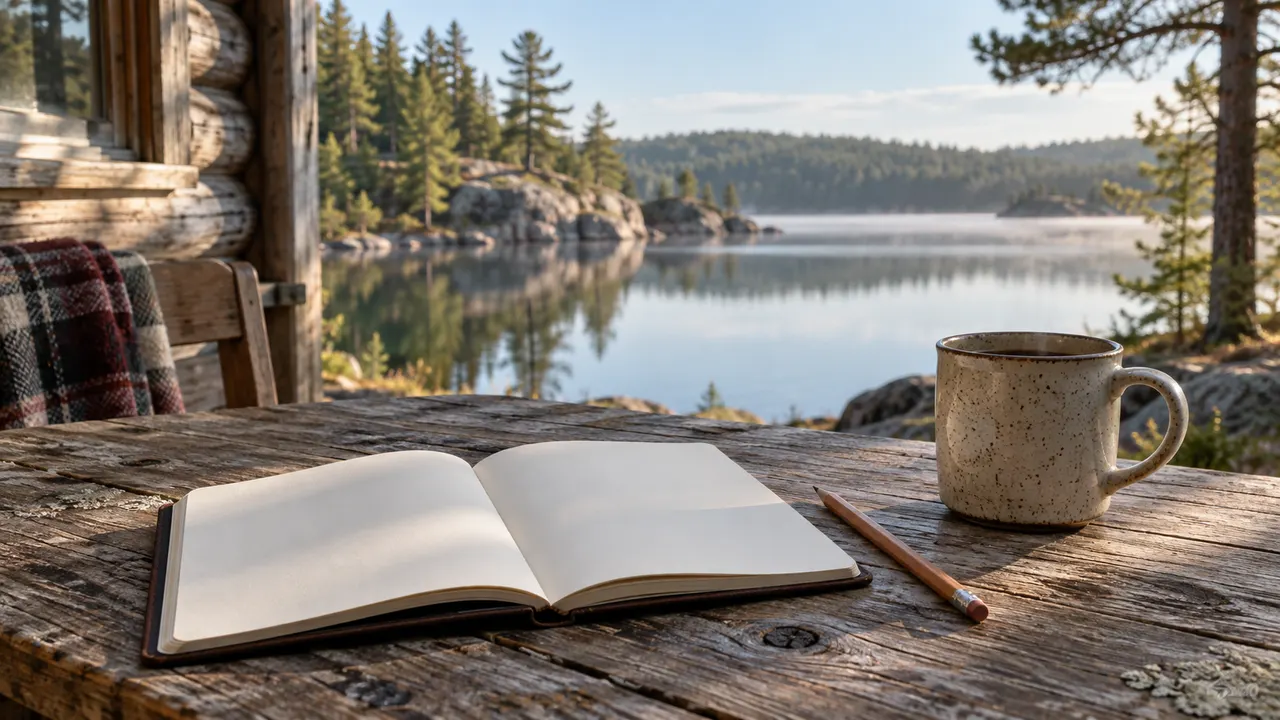
Phone photographs can make a week at the lake look wonderfully clear and leave the order of events a complete mystery. Which morning was that? Was it the walk before the rain, or the evening after everyone got back? A few notes beside the pictures can keep those small details from slipping away.
You don’t need a handsome journal or a plan to write every night. A plain notebook works. So does one note on your phone, provided you give it a name you will recognize in six months. The aim is to keep a trace of the trip, not create another task to feel behind on.
Begin with the place and the day
Write the date and a place name you are comfortable recording. ‘Tuesday, lake near the cabin’ may be enough for a private memory. If you want a useful record for another visit, add a little more detail. Check unfamiliar spellings rather than trusting whatever the group happened to call a bay.
Keep private locations private. Before sharing a journal page or a photograph with location data, think about whether it identifies someone’s property or a place your host asked you not to publicize. You can remember a good afternoon without posting its exact coordinates.
Record the detail the camera missed
The picture has the sunset. Your note might have the sound of a screen door, the mug someone kept misplacing, or the conversation that made everyone stay outside a little longer. A sentence is enough. Specific details usually bring back more than a paragraph saying the scenery was beautiful.
Let an unfinished observation stay unfinished. ‘A small brown bird by the steps’ is an honest note. You can look it up later, but there is no reason to attach a confident name just to make the page look complete. Put a question mark beside a guess.
Give photographs a few words
Pick two or three images while the day is still fresh. Add names, if the people pictured are happy with that, and a short explanation of what was happening. Keep a copy of the original files. A cropped version for sharing can sit alongside them rather than replace them.
If several people contribute pictures, ask them to send the date and a sentence with the file. Otherwise, the best photograph in the group chat may become the hardest one to place. A little context now saves a long exchange of ‘was that before lunch?’ later.
Leave room for an ordinary day
Not every entry needs a memorable outing. A morning spent reading indoors belongs in the record too. Write down the book, the weather you could see through the window, or the lunch that took longer than expected. Those quieter parts stop a journal becoming a list of highlights that could belong to anybody.
Children can contribute a drawing or a question instead of a polished description. Ontario Parks has a nature-journaling article that encourages young observers to use pictures as well as words. A family notebook can happily contain both; the pages do not have to match.
Finish after you get home
Set aside a short stretch of time to put the notes and photographs together. Correct the obvious dates, add the names you meant to ask about, and mark anything you still cannot identify. Keep unanswered questions rather than quietly turning them into facts.
Then stop editing. A useful lake journal can be uneven, brief and slightly untidy. If a page brings back the smell of damp timber or the reason everyone laughed at breakfast, it has done its job.