
There are twenty-seven pictures of the lake and one slightly crooked photograph of the cabin kitchen. The lake pictures are prettier. The kitchen picture has the cereal boxes, the borrowed mug and the towel somebody hung over a chair. In a few years, it may be the one that brings the holiday back.
Before August ends, give your summer photographs one ordinary evening of attention. You are not making an exhibition. You are helping your future self remember which lake that was, who came along and why everyone was laughing beside the car.
Start with one outing
Opening the whole year’s camera roll can turn a pleasant job into something you postpone. Choose one Ontario day trip or one weekend away. Put those photographs together before deciding which deserve to be favourites.
Check for pictures on another family member’s phone as well. They may have the beginning of the walk while yours starts at lunch. Ask before copying or sharing their pictures, and keep track of whose photographs they are. A shared holiday does not make every photograph yours to publish.
Keep the details you cannot see
A picture of a dock may not tell you the lake’s name. Add the location while somebody still remembers it. If you are unsure, leave a question in your notes instead of assigning the name of the nearest place you recognise.
The useful caption is often very small: which afternoon it was, where you stopped on the way, or what happened just outside the frame. Avoid making every caption a complete account of the trip. A few accurate words are easier to finish, and easier to read later.
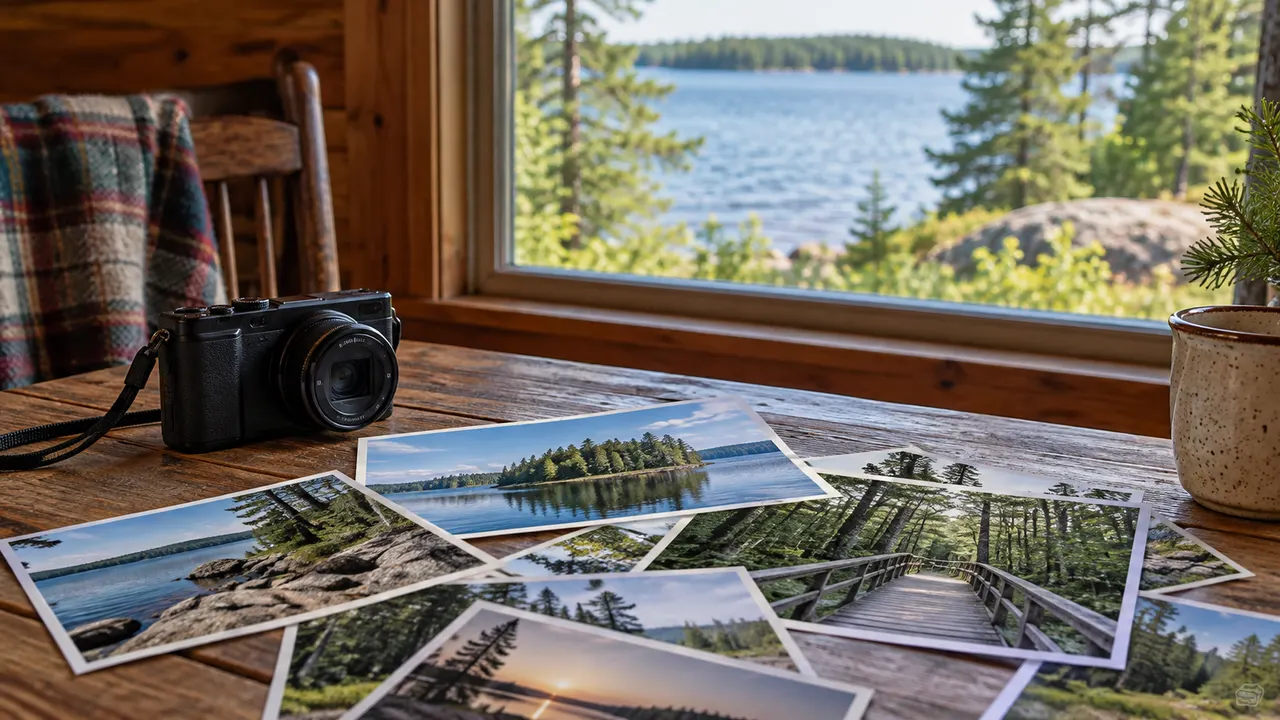
Let the family choose a few
Give everyone a chance to pick favourites. A child might choose the blurry picture of a frog rather than the carefully framed sunset. Ask what they remember about it and keep a sentence in their own words if they are happy for you to do so.
You can keep a tidy selection for showing friends without deleting all the odd pictures from your personal collection. Be especially cautious about hurried deletion from a service that synchronises changes across devices. First understand where your originals are stored and how that service handles removal.
Make a small album you will actually open
Twelve photographs with a beginning, middle and end can tell the story of an outing perfectly well. Include the drive, the walk, the picnic and the ride home. Six nearly identical views of the water probably do not need to occupy half the album.
An album can stay digital. If you prefer a few prints, choose a handful after looking at the selection on a larger screen. There is no obligation to turn every summer into a beautifully bound book. An unfinished book project can hide the photographs as effectively as an unsorted folder.
Check the copy before putting the phone away
Make sure the chosen pictures and their notes are saved where you intended. Open a couple from that location instead of assuming a transfer finished because the progress window disappeared. Keep a separate copy of the photographs that matter, using a method you know how to retrieve from.
Then stop for the evening. The point was to preserve a bit of the summer, not spend the rest of it managing files. Next time someone asks about the trip, you will have something better to show than a long scroll through your camera roll.